
The street dollar rate, explained
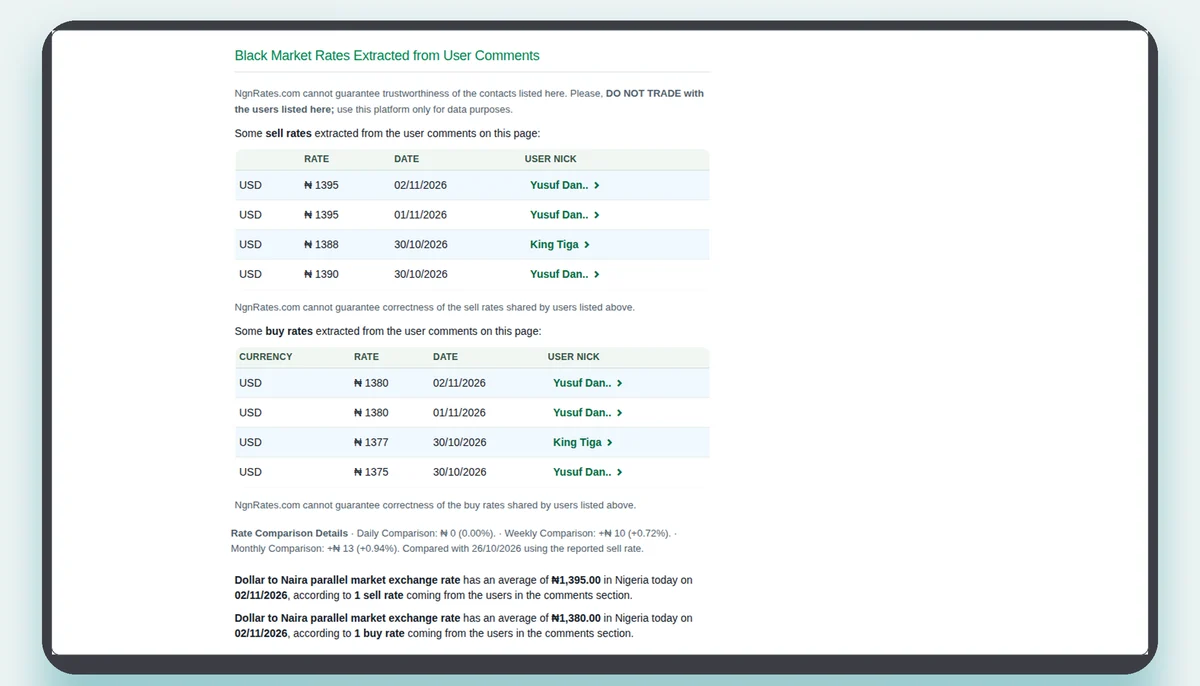
The street rate, also called the parallel rate, is the price at which cash dealers buy and sell dollars outside the official market. In Lagos, dealers quote a sell rate and a buy rate, and these quotes vary by dealer, city and amount. This site's street rate is an average of quotes posted by users on NgnRates.com. It is thinner evidence than a bank print, and a real transaction will differ. This page explains the street market in words, without any numbers.
What the street rate is
The street rate is the exchange rate quoted by cash dealers in places like Lagos, Abuja and Kano. It is called the parallel rate because it exists alongside the official rate. Dealers buy dollars from people who have them and sell dollars to people who need them, making a margin between the buy and sell prices. The street market is unregulated and operates on trust and reputation.
Unlike the official market, the street market is open every day, including weekends. Dealers set their own rates based on supply and demand, their own stock of dollars, and their expectations of where the official rate is heading. The rates posted online are often from dealers or their agents, and they can change within minutes.
The sell and buy sides
A street dealer quotes two rates: the sell rate and the buy rate. The sell rate is the naira price at which the dealer will sell you one dollar. The buy rate is the naira price at which the dealer will buy one dollar from you. The sell rate is always higher than the buy rate; the difference is the dealer's profit.
If you are buying dollars, the sell rate is your cost. If you are selling dollars, the buy rate is your proceeds. The gap between the two is usually small, but it can widen when the market is volatile or when a dealer is low on stock. Always confirm which side you are being quoted before you agree.
Why quotes differ between cities and dealers
Street rates differ because the cash dollar market is fragmented. A dealer in Lagos may have more dollars than a dealer in Kano, or vice versa. The cost of sourcing dollars, the level of demand, and the dealer's own risk appetite all affect the quote. A dealer who knows you may give a better rate than a stranger. A large transaction may get a better rate than a small one.
Quotes also differ by payment method. Cash is usually the most expensive because the dealer must hold physical dollars. Transfers within Nigeria may be cheaper, and transfers to a foreign account may be different again. The rate posted online may be for cash only, or it may be for a specific amount. Always ask for the details.
Why a rate from user posts is thin evidence
The street rate on this site is an average of quotes that users post in the comments of NgnRates.com. On many days, only one user posts a quote per side, so the average is that single quote. It is not a survey of bureaux; it is a reported rate from an unknown source. The poster may be a dealer advertising a rate, a customer reporting what they were offered, or someone guessing.
Because it is based on user posts, the street rate is thinner evidence than a bank print. A bank print is a volume-weighted average of actual deals, while a user post is one person's word. The street rate here should be treated as a rough indication of the market level, not as the exact price you will be offered.
What to check before relying on a street quote
Before you act on a street quote, check four things: who is quoting, for how much, cash or transfer, and when. Ask the dealer for their name or shop location. Confirm the amount: a rate for a thousand dollars may not apply to a hundred. Ask whether the rate is for cash or transfer. And check the time: street rates change quickly, and a quote from the morning may be stale by afternoon.
Also compare the quote with the average on this site and with other dealers. If a quote is far from the average, ask why. It may be a better deal because the dealer is desperate to sell, or it may be a scam. Never send money in advance to a dealer you do not know.
The street rate and the official rate
The street rate is usually higher than the official rate because cash dollars are scarce and the official market is rationed. The gap between the two is the premium a cash buyer pays. The premium can be large when the CBN restricts dollar supply, and it can shrink when the official market is liquid.
The street rate also reacts to news faster than the official rate. If the CBN announces a devaluation, street dealers adjust their quotes within hours, while the official rate may not move until the next trading day. The street rate is a barometer of sentiment, but it is not a substitute for the official rate.
Key facts about the street rate
Read next
Questions about the dollar rate
What is the parallel market?
The parallel market is the cash market where dealers buy and sell dollars outside the official window. It is also called the black market, though the term is less used now. The rates in the parallel market are set by dealers, not by the Central Bank.
Why is the street rate higher than the official rate?
The street rate is higher because cash dollars are scarce and dealers face costs and risks. The official market is rationed, and many people cannot get dollars at the official rate, so they pay a premium on the street. The premium is the gap between the two rates.
Is the street rate legal?
The street market is not regulated, but it is widely used. The CBN has tried to unify the rates, but the street market persists because official dollars are not available to everyone. Dealers operate openly in many cities.
How do I find a good street rate?
Compare quotes from several dealers and check the average on this site. Ask for the rate for your exact amount and payment method. Be wary of rates that are much better than average; they may be scams. Deal with dealers you know or who have been recommended.
What is the difference between the sell and buy rates?
The sell rate is the price at which the dealer will sell you dollars; the buy rate is the price at which the dealer will buy dollars from you. The sell rate is always higher, and the difference is the dealer's margin. When you buy, you pay the sell rate; when you sell, you receive the buy rate.
A contract on the dollar-naira rate, settled without cash exchange
FxPro offers a contract for difference on the dollar-naira pair. You do not buy or sell physical dollars; the contract is settled in your account currency. Opening an account requires identification and takes a day or two, and a practice account costs nothing.