
Today's two dollar rates in Nigeria: official and street
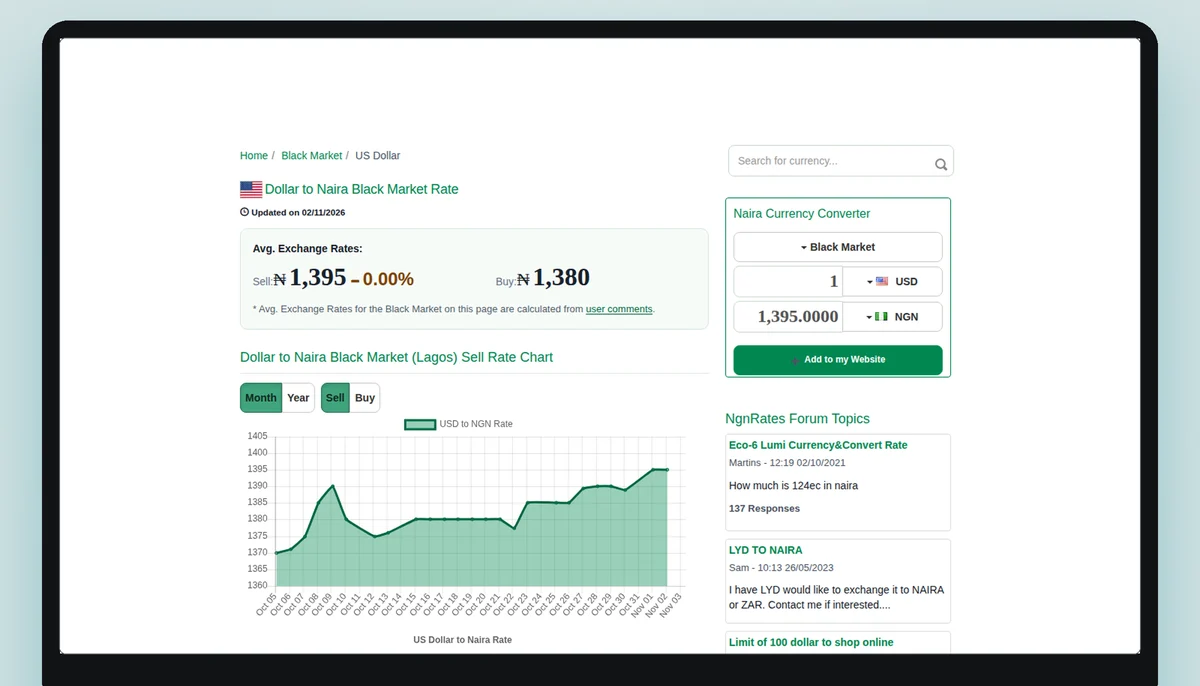
The Central Bank of Nigeria publishes a volume-weighted rate for the official market each trading day. Lagos street dealers quote their own sell and buy prices. This page shows both, dated, with the gap between them in naira and as a per cent of the official rate. The official figure is for the latest trading day and may be provisional if only interbank deals have printed. The street figures are averages of dealer quotes posted by users, often one per side.
Two dollars on the same day
The CBN's official rate, the Lagos street rate on each side, and the gap between them.
| Rate | Naira per dollar | Above official | Above official, % |
|---|---|---|---|
| CBN official (NFEM) | ₦1,347.94 | ₦+0.00 | +0.00% |
| Lagos street, dealer sells dollars | ₦1,395.00 | ₦+47.06 | +3.49% |
| Lagos street, dealer buys dollars | ₦1,380.00 | ₦+32.06 | +2.38% |
Rates of: 02.11.2026
The official rate and what it settles
The official rate on this page is the CBN's volume-weighted NFEM rate for the latest trading day. It is the average price at which banks and authorised dealers traded dollars in the official window, weighted by the size of each deal. A bank transfer, a card payment or a formal business transaction should settle at or near this rate, plus the bank's own charges. The rate is published by the CBN each trading day, but no row appears for weekends or public holidays.
The newest CBN row can be provisional. On some days the rate rests on interbank deals only, with no deals yet counted in the wider NFEM, and this site marks it as such. A provisional rate may be revised later in the day or the next morning. If the rate is marked provisional, a reader should treat it as an early print, not the final figure.
The street rate and where it comes from
The street rate is the Lagos sell and buy average that NgnRates.com computes from rates users post in its comments. On many days that is a single quote per side, so it is a reported rate, not a survey of bureaux. The sell side is the price at which a dealer will sell dollars to you; the buy side is the price at which the dealer will buy dollars from you. The gap between the two is the dealer's margin.
Because the street rate is an average of posted quotes, it is thinner evidence than a bank print. It does not include every dealer in Lagos, and it does not weight quotes by volume. A reader should treat it as a rough indication of the cash market, not as the price they will be offered at a particular counter.
What the sell and buy sides mean for you
If you are buying dollars, the street sell rate is the one that matters: it is the naira price you will pay for each dollar. If you are selling dollars, the street buy rate is what a dealer will pay you. The sell rate is always higher than the buy rate; the difference is the dealer's profit and covers the cost of sourcing and holding cash dollars.
At a bank, the equivalent rates are the bank's selling and buying rates for dollars, which are usually close to the official rate. The street sell rate is typically higher than the official rate, and the street buy rate is typically lower. The gap shown on this page is the street sell rate minus the official rate, which is the extra naira a cash buyer pays over the official price.
The gap in naira and per cent
The gap is the street sell rate minus the official rate. Shown in naira, it is the extra amount a person pays for one dollar on the street compared with the official rate. Shown as a per cent of the official rate, it is the premium on the street dollar. A wider gap means the official dollar is harder to get and the street premium is larger; a narrower gap means the two markets are closer.
The gap is not constant. It changes with the supply of dollars in the official window, the demand for cash dollars, and the confidence of dealers. A large gap can persist for months if the CBN rations dollars and the street market is the only source for many buyers. A small gap suggests that the official market is meeting demand and the street premium has shrunk.
How much weight each number can bear
The official rate is a volume-weighted average of actual deals in the NFEM, so it is a solid reflection of the interbank market. However, it may not be the rate a retail customer gets from a bank, because banks add their own margin and charges. The street rate is an average of posted quotes, often one per side, so it is a thin reflection of the cash market. A real transaction at a bureau will differ by dealer, city and size.
Neither number is a forecast. The official rate records what has already traded; the street rate records what dealers have posted. This page does not predict where either rate will go. It simply shows the two numbers side by side and lets the reader see the gap.
What to check before acting on a rate
Before you buy or sell dollars, confirm the rate with the counterparty. If you are using a bank, ask for the bank's selling rate for the amount you need, including all charges. If you are using a street dealer, ask for the sell or buy rate for your exact amount and payment method, and compare it with the average shown here. Remember that a dealer may quote a different rate for a large amount or for a transfer rather than cash.
The rates on this page are for information, not for execution. They are updated twice a day, but the market can move between updates. The official rate is fixed for the trading day once the CBN publishes it, but the street rate can change at any time. Always get a live quote before you commit.
Key facts about today's rates
Read next
Questions about the dollar rate
Why are there two dollar rates in Nigeria?
Nigeria has an official market, the NFEM, where banks trade under CBN rules, and a street market where cash dealers quote their own prices. The official rate is a volume-weighted average of bank deals; the street rate is an average of dealer quotes posted by users. The two markets serve different customers and have different prices.
Which rate should I use for a bank transfer?
A bank transfer should settle at or near the official rate, plus the bank's charges. The official rate on this page is the CBN's volume-weighted NFEM rate for the latest trading day. Your bank will have its own selling rate, which may be slightly higher. Ask the bank for the exact rate before you send.
What does the street sell rate mean?
The street sell rate is the naira price at which a Lagos dealer will sell you one dollar in cash. It is the rate you pay when you buy dollars from a street dealer. The buy rate is the price the dealer will pay you for your dollars. The sell rate is always higher than the buy rate.
Why is the street rate higher than the official rate?
The street rate is higher because cash dollars are scarce and dealers face costs and risks that banks do not. The official market is rationed, and many people cannot get dollars at the official rate, so they turn to the street and pay a premium. The gap between the two rates is that premium.
How often are these rates updated?
The official rate is published by the CBN once per trading day and is read from its feed twice a day. The street rate is computed from user posts on NgnRates.com and is also read twice a day. The rates on this page reflect the latest reading; they do not update hourly.
A contract on the dollar-naira rate, settled without cash exchange
FxPro offers a contract for difference on the dollar-naira pair. You do not buy or sell physical dollars; the contract is settled in your account currency. Opening an account requires identification and takes a day or two, and a practice account costs nothing.